1. Introduction—What Is a Mobile Network Jammer?
In the present time, it's hard to keep one's privacy and at the same time be concentrated while the mobile phone is ringing or vibrating constantly. A mobile network jammer is the solution to this problem. These are special devices that are meant to hinder mobile signals in a limited area, thus stopping calls, messages, and data transmissions for a brief moment. Whether it is exam halls ensuring fair tests, prisons keeping security, or corporate offices needing confidentiality during meetings, jammers are becoming more and more relevant. Consider them as digital silencers who are helping you take back control over your communication environment.
By the time you finish reading this guide, you will have a very clear understanding of the functioning of a network blocker office, the different kinds of jammers available, and how to buy one that suits your personal or business needs.
2. The Importance of Mobile Signals—and the Reasons for Blocking Them
Mobile signals are the essential part of modern communication, carrying voice and data through GSM, 3G, 4G, and the latest 5G networks. Nevertheless, constant connectivity may lead to serious issues such as data theft, privacy violations, and distraction in sensitive workplaces, etc., which are the main modern problems created by constant connectivity.
In the corporate world, the use of unauthorized phones may lead to the leak of confidential information. In exam halls, the risk of cheating by using mobile devices arises, and areas that are secure, such as prisons or military zones, need to manage their communication. A mobile network jammer or network blocker office device is what you need for such situations.
The legal and ethical use of these devices guarantees that the areas with sensitive information take care of privacy, productivity, and data security. Many offices nowadays set up mobile signal interference devices for blocking calls and data leaks, thus guaranteeing that meetings will go on without any interruptions and that the environment will be under control.
3. How Mobile Network Jammers Actually Work
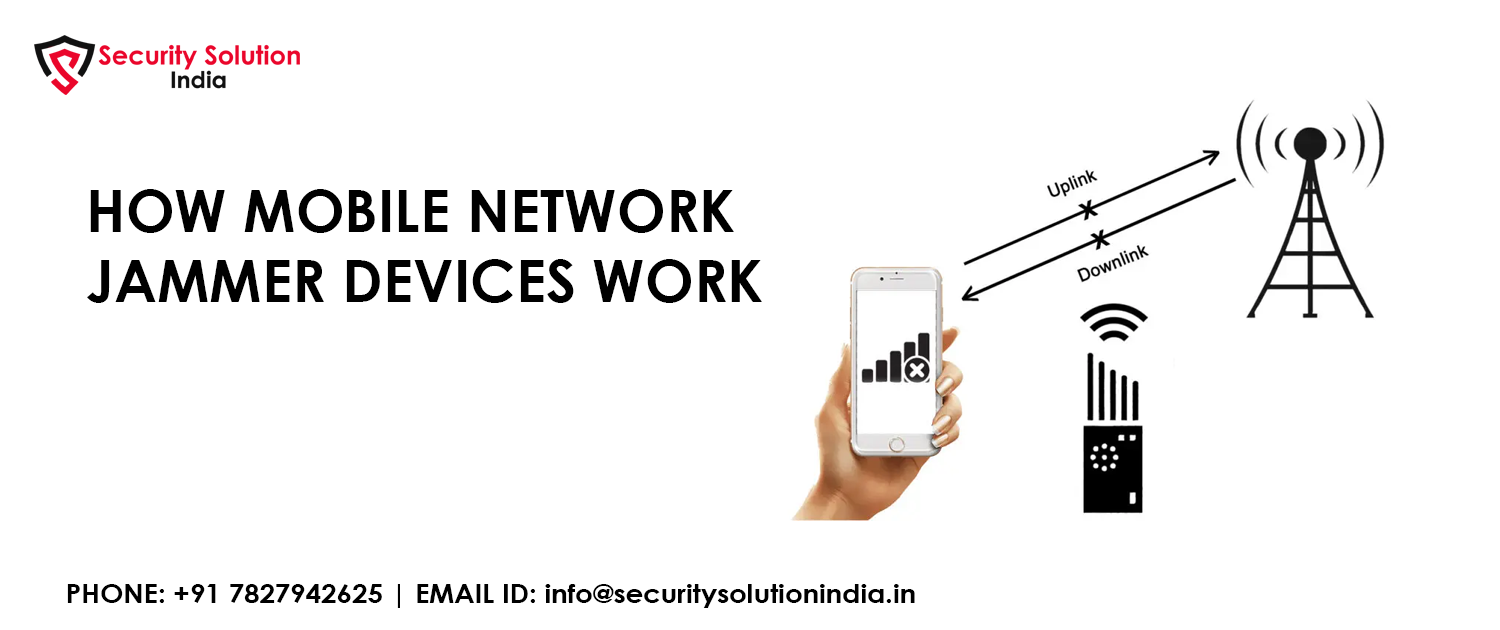
The principle of a mobile network jammer is very simple yet powerful at the same time. Mobile phone users use radio waves to communicate, and the communication goes through to the closest tower. The jammer kills the communication by sending a signal on the same frequency as the mobile network, which is actually creates noise in mobile communication. Let’s break it down step-by-step:
- Detect Target Frequency: The jammer signals the detection of existing frequency bands (GSM, 3G, 4G, 5G, etc.) in the vicinity.
- Generate Interference Signal: It then generates a high-power, noise-like signal that is simultaneously interfering with that frequency.
- Disrupt Connection: The active disruption prevents the mobile devices from getting connected to their respective network towers, so no service is available.
The performance of the jamming depends on the power output, antenna design, and environmental factors.
A conventional signal blocker device used for GSM 2G/3G/4G can vary in coverage from a few meters to several hundred meters based on its specifications.
4. Types of Mobile Signal Jammers
Different needs attract different jammer designs. The principal varieties of cellular jammers consist of:
Handheld Portable Jammers: Small and powered by a battery, they can be used personally or temporarily, for instance, in classrooms or small offices.
Vehicle-Mounted Jammers: These are typically used in security convoys or government cars, where the device ensures that no external gadget can either track or transmit signals while the vehicle is in motion.
Fixed-Location or Room Jammers: They are permanently established in meeting rooms, prisons, or auditoriums and provide broad coverage and uninterrupted operation.
Single-Band vs. Multi-Band Devices: A single-band jammer is designed for one frequency (e.g., GSM), whereas the multi-band ones block several networks (2G, 3G, 4G, Wi-Fi, GPS) at the same time.
| Type | Range | Best For |
|---|---|---|
| Handheld | 5–15 meters | Small areas, classrooms |
| Vehicle-Mounted | 20–50 meters | Moving vehicles, security convoys |
| Fixed | 50–200 meters | Offices, prisons, auditoriums |
| Multi-Band | 2G–5G & Wi-Fi | Broad coverage zones |
Choosing the right office network blocker depends on your area size, signal strength, and purpose.
5. Legal & Safety Considerations
Sometimes, mobile network jammers are set up for the right purpose, but their application is strictly controlled and closely observed in most countries. In India, they are allowed by law only in government-sanctioned places like prisons, examination centres, and security establishments. Individuals and companies are required to get permission prior to the installation of such devices.
In case of responsible use, jammers are not dangerous to humans. They radiate non-ionizing radiation that is comparable to Wi-Fi routers—this means it has no long-term negative health effects. The use of jammers in a responsible manner is a way of creating a safe area while not overly interfering with outside communications.
It is always advisable to rely on mobile signal interference devices sourced from reputable suppliers to ensure that the usage is legal and safe, and the performance is always up to standard.
6. Key Features to Look for When Buying a Jammer
Consider the following features before you go ahead and buy a network blocker for the office:
- Frequency Range: Make certain that it includes GSM, 3G, 4G, and 5G bands.
- Signal Strength & Range: A model with range control adjustment would be ideal to use in different areas.
- Cooling System: If it is going to be on continuously, then there must be a good heat dispersal system.
- Portability & Power Source: Rechargeable devices are perfect for use in different locations; wired ones are good for fixed placements.
- Warranty & After-Sales Service: Do not forget to buy from a vendor who will provide technical assistance and offer warranties.
A good model of the network blocker office takes into account the factors of range, efficiency, and durability, thus providing peace of mind even in crowded areas.
7. Picking the Proper Jammer According to Your Requirements
A mobile network jammer setup differs from one environment to another:
- Exam Halls: Little handheld jammers have a range of moderate distances.
- Corporate Offices: Stationary network blocker office units for the assurance of secret conversations.
- Vehicles: Unobtrusive jammers to keep track of the location safely.
- Large Institutions: the use of multi-band sets, which prevent the use of both GSM and Wi-Fi signals, thus making the coverage very large.
Check through this quick list before purchasing:
☑ Recognise your intention (security, privacy, focus)
☑ Specify the coverage area
☑ Pick the proper frequency bands
☑ Warranty and technical support are to be ensured
To look at some of the latest GSM 2G/3G/4G signal blocker devices, visit us to see our recommended range
8. In Conclusion—Connection that is Smart, Secure, and Controlled
When you learn how a mobile network jammer functions, it will lead to informed decisions and thus privacy and communication control options. These devices, if used properly, will bring about safety, discipline, and security in areas that are sensitive to these issues. If you are operating an office, holding exams, or dealing with a high-security area, the right mobile signal interference device will give you a balanced and controlled environment.
9. FAQ Section
Q1. What is the range of a mobile jammer?
The ranges go from 5 meters (for handheld jammers) up to more than 200 meters (for industrial models).
Q2. Are jammers allowed in India?
Only government and institutional authorization can use them legally. Always check for compliance before buying.
Q3. Can a jammer interfere with Wi-Fi and GPS at the same time?
The answer is yes; there are jammers that can operate on multiple bands and can thus interrupt the signals from mobile networks, Wi-Fi, GPS, and Bluetooth at the same time.
Q4. What separates 4G from 5G jammers in terms of functionality?
The 4G jammers are capable of functioning in the LTE frequency bands, while the 5G jammers are capable of blocking the millimeter-wave frequencies that are the highest.
Q5. What are the maintenance requirements for a jammer device?
Proper ventilation, no moisture exposure, and following the manufacturer's guidelines for safe long-term use are the key maintenance requirements for a jammer device.